
Part-time staff are essential to schools — substitutes, aides, coaches, and extra-duty personnel — but their variable hours and mixed classifications make payroll harder than it needs to be. The fix is not more effort; it is a repeatable system built on correct classification, centralized deadlines, and automated time capture.
Under the FLSA, how long must non-exempt employee time records be retained?
Select one answer.
Start with classification, because everything else depends on it
The Fair Labor Standards Act (FLSA) establishes minimum wage, overtime pay, recordkeeping, and child labor standards affecting full-time and part-time workers, and it distinguishes between exempt and non-exempt employees. In K-12 settings, this directly affects substitutes, coaches, and extra-duty personnel, and districts often struggle to determine whether those roles qualify for overtime or are exempt. Getting classification right first prevents downstream errors in pay, benefits eligibility, and tax treatment.
- Confirm each part-time role as exempt or non-exempt before the first paycheck.
- Document the reasoning for each classification so auditors can follow it.
- Revisit classifications when job duties change, not just at hire.
Build one centralized payroll calendar
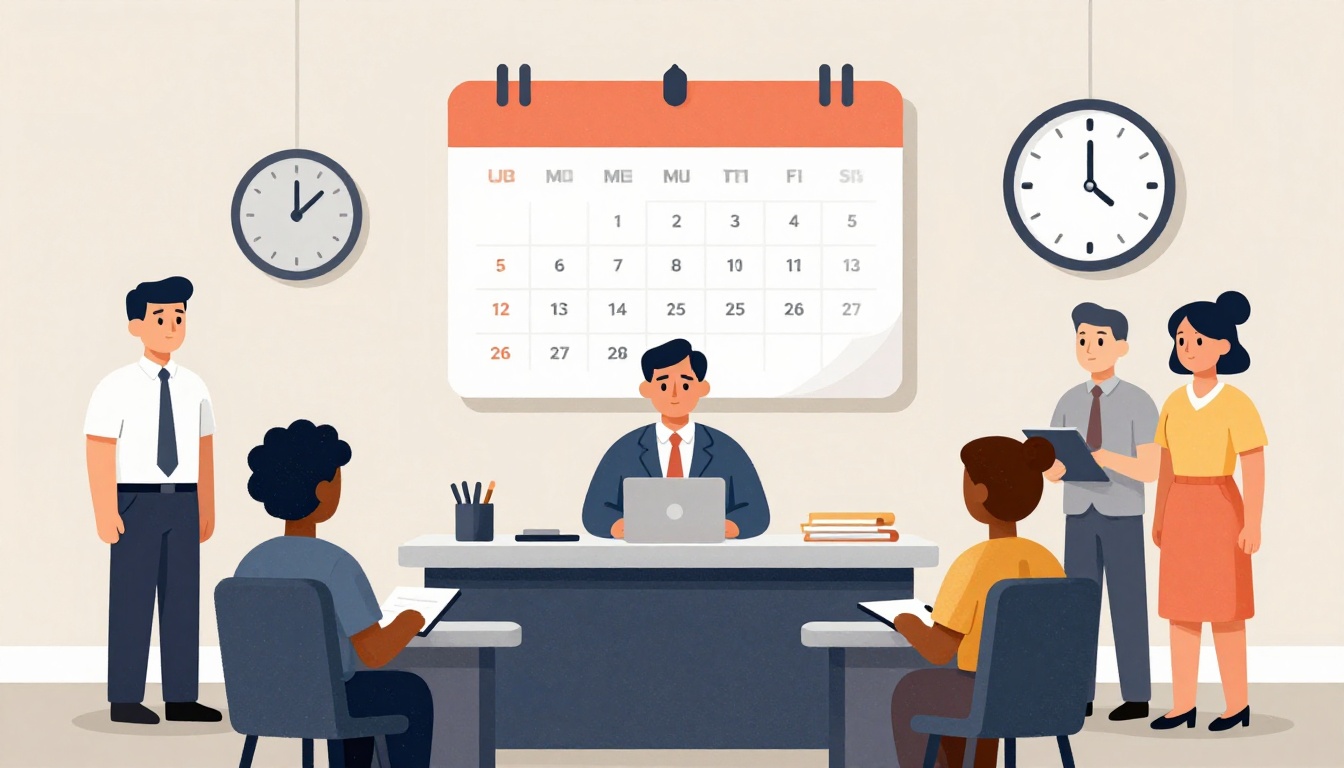
A centralized payroll calendar keeps the team organized and prepared for due dates, including regular paydays, IRS filing dates for forms like 941 and W-2, banking holidays, and state and local tax filing requirements. Schools with multiple worker types on different schedules benefit most from a single shared calendar rather than per-department reminders.
- List every pay cycle (weekly, biweekly, semimonthly, monthly) in one place.
- Add IRS and state filing deadlines plus banking holidays.
- Share the calendar in a tool your whole team already uses.
Automate time capture and payroll calculations
Manual time card preparation carries a human error rate estimated between 1 percent and 8 percent, and time clock software can automatically apply payroll rules for daily or weekly overtime and regular hours. For schools with many part-time staff, automation removes the most error-prone step.
- Connect time tracking directly to payroll so hours flow without re-entry.
- Correct time card errors as they occur rather than at period end.
- Let the system apply overtime rules instead of calculating them by hand.
Keep FLSA-required records, and keep them retrievable
To comply with the FLSA, employers must keep records of employees' arrival and departure times, break time, and total hours worked each day, and non-exempt employee time records must be retained for two years. Schools are required to keep detailed records of each employee's hours worked, pay, and overtime for non-exempt workers.
- Store daily arrival, departure, break, and total-hours data for every non-exempt part-time employee.
- Retain those records for at least two years.
- Make records easy to pull during an audit or wage inquiry.
Add internal controls that catch problems early
Payroll risks in part-time workforces include timesheet padding, attendance by proxy (one employee clocking in for another), and incorrect classification. Automated time and attendance tracking, combined with access controls and multi-factor authentication, reduces these risks.
- Require supervisor approval before payroll runs.
- Use access controls and MFA on payroll and timekeeping systems.
- Audit a sample of time records each pay period.
Communicate policies up front
Communicating payroll policies and procedures to employees from the beginning — and updating them as changes occur — saves time later by preventing repeated questions. For part-time staff who may work infrequently, written clarity matters even more.
- Publish how hours are recorded, approved, and paid.
- Explain overtime rules for non-exempt roles in plain language.
- Update staff whenever a policy or pay schedule changes.
A quick implementation checklist
- Classify every part-time role as exempt or non-exempt and document it.
- Build one centralized payroll calendar with paydays and filing deadlines.
- Connect time tracking to payroll and automate overtime calculations.
- Retain daily hours, break, and pay records for at least two years.
- Add approval workflows, access controls, and MFA.
- Publish payroll policies and update them when things change.
How the Featured Expert Can Help
Harness Potential is a full-service back-office provider — not just CFO support — serving charter schools, school districts, and nonprofits in California. Its services span finance, accounting, compliance, and operational support, including HR/payroll and specialized California reporting such as CALPADS and school-based Medi-Cal reimbursement. The firm was founded by Carrie Wagner, former President and COO of Ex Ed, who founded and operated a California charter school for 10 years, and its team is primarily comprised of education and charter experience. Learn more at Harness Potential.